
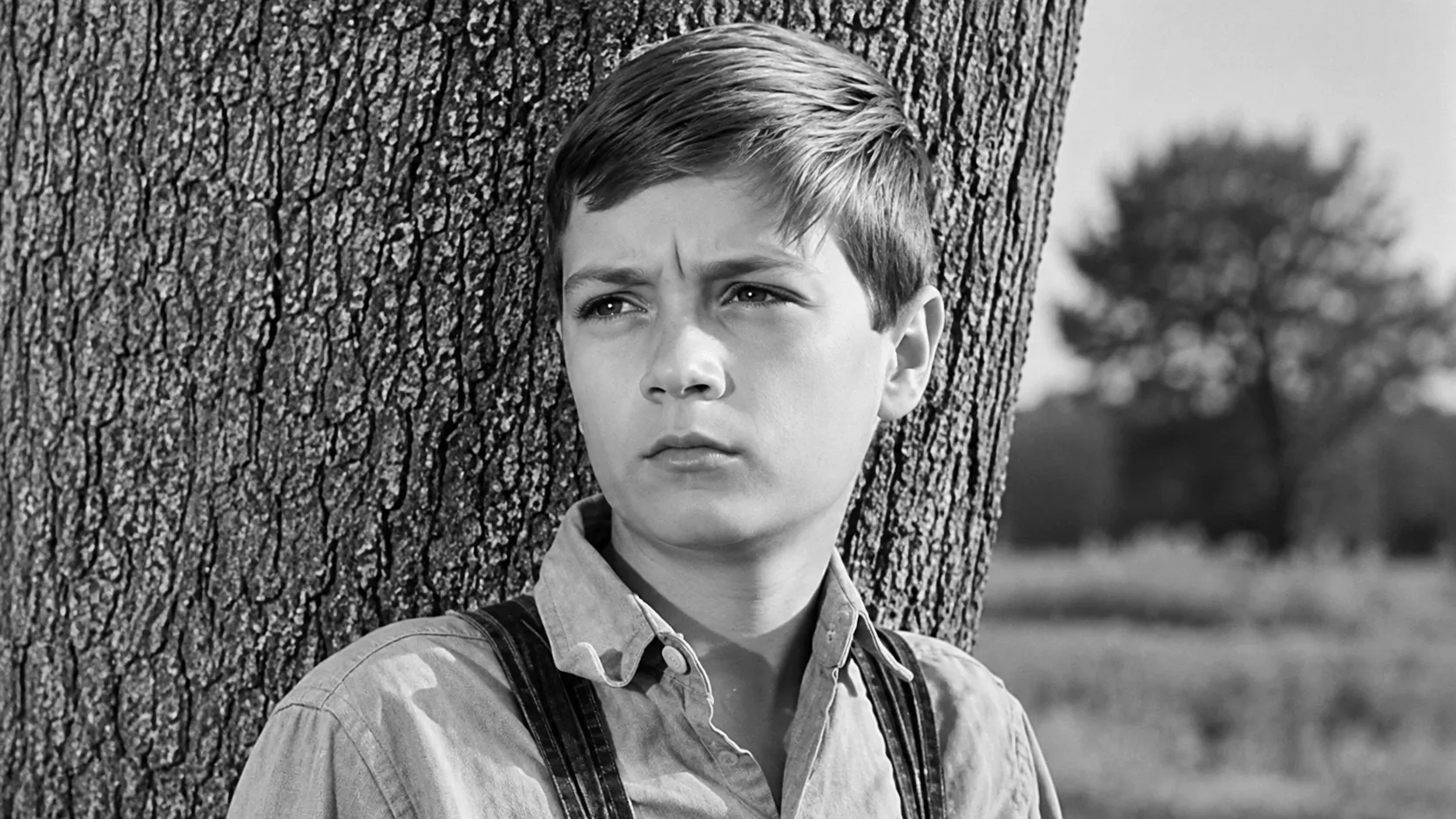
Phillip Alford is the actor who played Jem Finch, Scout’s older brother, in the 1962 film adaptation of To Kill a Mockingbird. Born on September 11, 1948, in Gadsden, Alabama, he worked on only a handful of film and television projects before leaving acting behind in the early 1970s. He now runs a business in Grenada, Mississippi, far from the film industry that once made him a familiar face to millions of moviegoers. Decades later, his single, decisive step away from acting is still one of the more unusual footnotes in the story of a film that most cast members never fully left behind.
Quick Facts About Phillip Alford
| Detail | Information |
| Full Name | Philip Alford (goes by Phillip) |
| Born | September 11, 1948 |
| Birthplace | Gadsden, Alabama |
| Known For | Jem Finch in To Kill a Mockingbird (1962) |
| Years Active | 1962 to 1972 |
| Education | Ramsay High School, Birmingham |
| Spouse | Carol Sue Moore (divorced) |
| Children | Two |
| Current Home | Grenada, Mississippi |
| Current Work | Businessman, construction industry |
Early Life in Gadsden and Birmingham
Phillip Alford was born to a brickmason in Gadsden, Alabama, according to Bhamwiki, a reference site focused on Birmingham history. His family later moved to Birmingham, where he grew up as one of two children and attended Ramsay High School. Nothing in his early life pointed toward acting. His household had no ties to film or television, and by most accounts he was a typical Alabama teenager with a part time interest in local theater.
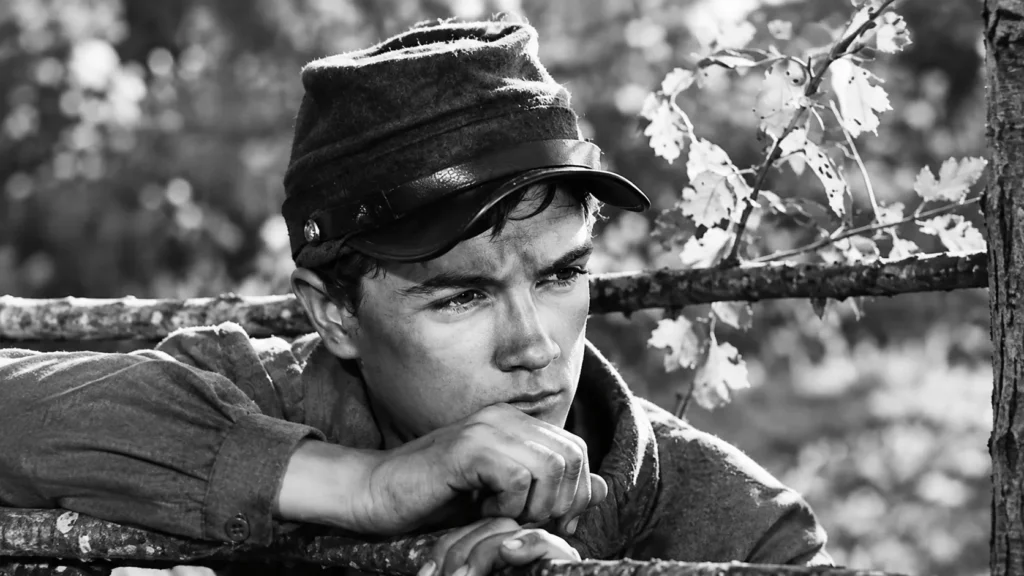
Before Hollywood came calling, Alford performed in three productions with Birmingham’s Town and Gown Civic Theatre, including a staging of The King and I. Director James Hatcher, who ran the theater program, noticed the young actor and thought he fit the part the film crew was searching for, a real Southern boy who could play Jem Finch.
The Search for Authentic Southern Kids
To Kill a Mockingbird was based on Harper Lee’s 1960 novel of the same name, a book Lee set in a fictional Alabama town drawn from her own childhood in Monroeville. The novel won the Pulitzer Prize in 1961, and the studio behind the film adaptation wanted the cast to feel as authentic as the source material. That meant looking outside the usual pool of professional child actors in Los Angeles.
Producer Alan J. Pakula and director Robert Mulligan wanted natural, unpolished Southern accents instead of trained Hollywood delivery, so casting scouts held open auditions in schools and community theaters across several Southern cities before settling on their young leads. Alford’s background in local theater, combined with his genuine Alabama accent, made him stand out once Hatcher put his name forward.
Mary Badham, who played Scout, was also from Birmingham, which meant two of the three central child roles went to actual Alabama natives instead of professional actors brought in from Los Angeles. That choice is often cited as one of the reasons the film’s small town Southern setting feels convincing rather than built on a studio backlot.
Landing the Role of Jem Finch
Hatcher called Alford’s mother to ask if her son wanted to audition. Alford initially said no, and only agreed once his mother worked out that he would only need to miss half a day of school for the tryout. That small compromise ended up changing the direction of his teenage years.
That single audition turned into a callback, and Alford became one of three finalists flown to New York City for a screen test. Weeks later, he learned he had won the role of Jem Finch opposite Mary Badham as Scout and Gregory Peck as Atticus Finch.
On the Set of To Kill a Mockingbird
During filming, Alford’s parents and his sister Eugenia traveled to Hollywood so the family could stay together. Eugenia ended up working as Mary Badham’s stand-in on set, giving the family an unusual double connection to the production.
Alford and Badham did not always get along while filming. In a 2022 interview marking the film’s 60th anniversary, Badham described how Alford and co-star John Megna once tried to settle a score with her during a scene where her character rides inside a rolling tire, steering it toward a parked utility truck. The prank worried the director enough that he brought in a stunt double, a former jockey, to finish the scene safely. That friction never made it onto the screen, and the two young actors delivered performances steady enough that the film went on to become a defining piece of American cinema.
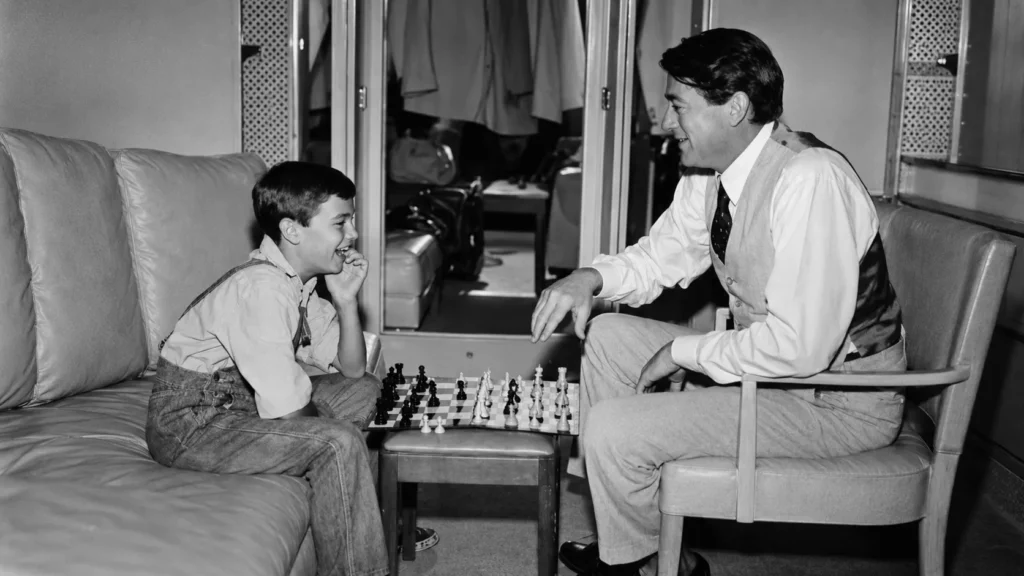
Some of these behind-the-scenes stories also surfaced in Fearful Symmetry: The Making of To Kill a Mockingbird, a documentary Universal Studios produced as a bonus feature for the film’s 1998 home video release. That documentary, along with later interviews, is where much of what is known about Alford’s audition and time on set actually comes from.
Life After Mockingbird: Other Film and TV Roles
To Kill a Mockingbird was Alford’s film debut, but not his only credit. He appeared as Boford Tyree in a 1963 episode of The Lloyd Bridges Show, then took the lead in the Disney serial Bristle Face in 1964, playing a boy raising an unusual dog with a shaggy, bristled coat.
In 1965, he played Boy Anderson in the Civil War drama Shenandoah alongside James Stewart. His remaining credits were smaller television roles: a 1969 episode of CBS Playhouse, a 1970 episode of The Virginian, the TV movie The Intruders, filmed in 1967 and aired in 1970, and the 1972 TV movie Fair Play, which turned out to be his last acting job.
Why Phillip Alford Left Acting
Alford stepped away from acting after Fair Play in 1972 and did not pursue Hollywood as an adult. Wikipedia notes that he followed his father into the construction business instead of chasing more film work. He was in his early twenties when he made that final television movie, still young enough to build almost any career he wanted, and he chose one with no connection to the industry that had made him briefly famous. A clean break of that kind is rare among actors who land a role as widely recognized as Jem Finch, which is part of why his story stands out among the film’s alumni.
How His Path Differed From His Co-Stars
Alford’s path stands apart from his two best known co-stars. Mary Badham continued to make occasional appearances tied to the film for decades and has spoken publicly about her time on set. Robert Duvall, who made his own film debut in To Kill a Mockingbird in a small but memorable part as Boo Radley, went on to become one of the most decorated actors of his generation. Alford took neither route, choosing a private working life over a public acting career or a life spent discussing a single role.
Unlike many former child actors who struggle to build a second career, Alford’s move into business appears to have been steady and deliberate. He has generally avoided interviews and public appearances tied to his acting past, choosing instead to build a life away from the spotlight.
What Phillip Alford Does Now
Alford lives in Grenada, Mississippi, where he works as a businessman, according to both Wikipedia and IMDb. He has occasionally taken part in documentaries about the making of To Kill a Mockingbird, offering his perspective as one of the last surviving cast members from the original production.
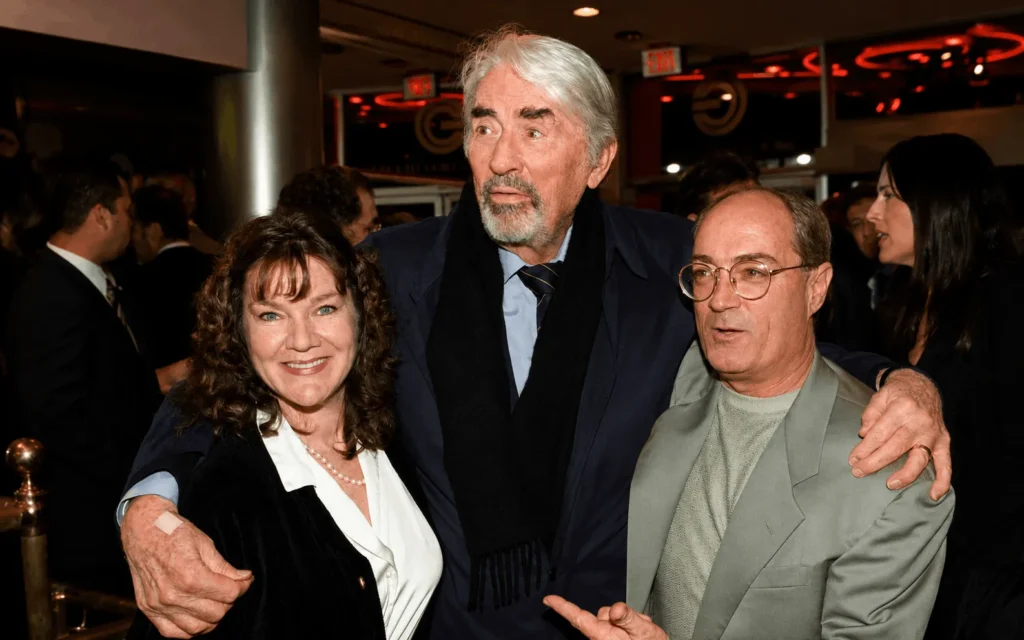
IMDb notes that Alford was inducted into the Alabama Walk of Fame in 1989 for his role as Jem Finch, an honor that came after he had already returned to Birmingham and moved on from acting. Outside of those occasional documentary appearances, he keeps a low public profile and gives few interviews.
Is Phillip Alford Still Alive Today
In that same 2022 interview, Badham said she remains the only member of the original child cast who still speaks publicly about the film on a regular basis. She said Alford stepped back from Mockingbird more completely than she has, guessing that the story simply felt too personal for him to keep revisiting. She added that Robert Duvall also rarely gives interviews about the film today.
As of that 2022 interview, Alford was described as alive and about to turn 78, since his birthday falls on September 11. No later source tracking the film’s original cast has reported otherwise, and current biographical pages continue to describe him in the present tense as a businessman in Mississippi.
Where to Find His Work Today
Interest in Alford tends to spike around anniversaries of the film and whenever a new documentary or retrospective article revisits the cast. To Kill a Mockingbird stays in regular rotation on classic movie channels and is easy to find on most major streaming and rental platforms, which keeps a new generation of viewers curious about what happened to the child actors who made it.
Alford’s other work is harder to track down. Shenandoah occasionally airs on Western-focused cable channels, but Bristle Face and his handful of single television episodes are largely absent from major streaming catalogs, which is part of why his post-Mockingbird career gets so little attention compared to his single film role.
Phillip Alford’s Place in Film History
To Kill a Mockingbird remains a fixture of American literature and film classes, and Alford’s performance as Jem is part of why the movie still holds up. The film earned eight Academy Award nominations, including Best Picture and Best Director for Robert Mulligan, and won three: Best Actor for Gregory Peck, Best Adapted Screenplay for Horton Foote, and Best Art Direction in black and white. Peck’s performance as Atticus Finch was later placed at the top of the American Film Institute’s list of the greatest heroes in American film.
Alford shared the screen with two performers whose work in the film is still studied today, and his casting as an unpolished, authentic Southern kid was part of what gave the movie its lived-in feel. He never tried to build on that fame. His single film credit turned out to be enough to secure his place in movie history, even though he chose a different path for the rest of his life.