
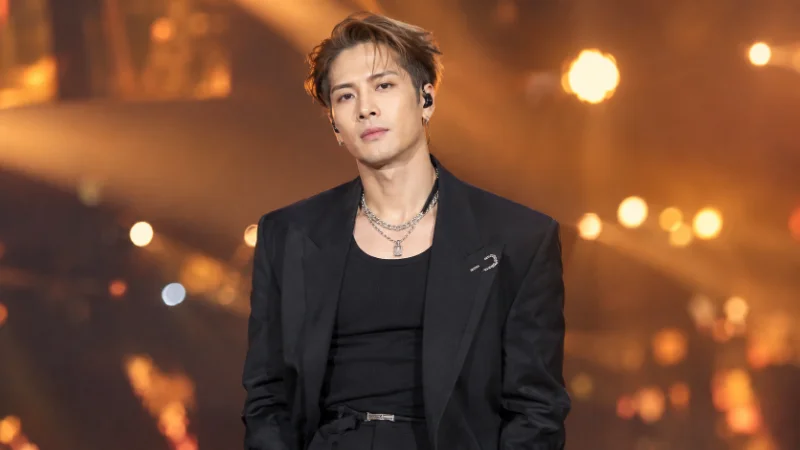
Jackson Wang is a Hong Kong-born rapper, singer, and fashion entrepreneur best known for helping build the K-pop group GOT7 before breaking away to become one of the first Chinese solo artists to chart on the Billboard 200. People searching his name usually want the same three things: how he got here, what he built along the way, and how much he is worth today. The short version is that a teenage fencer with an Olympic path in front of him traded it for a microphone, then spent a decade turning that gamble into a solo music career, a fashion label, and a run of luxury brand partnerships few pop stars can match.
From Fencing Prodigy to K-Pop Trainee
Wang was born Wang Ka-yee on March 28, 1994, in Kowloon Tong, Hong Kong. His father, Wang Ruiji, competed as an Olympic fencer, and his mother was a gymnast on the Chinese national team, so competition ran in the household from the start.
He tried gymnastics first, at age seven, then switched to fencing after watching his father’s team train. By twelve he had already won his first national gold medal, and within a few years he was ranked first in Hong Kong for junior sabre and eleventh in the world for his age group.
In 2010, a JYP Entertainment scout spotted him during a global audition in Kowloon. He was preparing for the Asian Junior and Cadet Fencing Championship at the time, and his parents told him he could go to Korea only if he won gold first. He won, then turned down scholarship offers from the University of Hong Kong and Stanford to move to Seoul for idol training in 2011.
Wang has said in interviews that the discipline from those fencing years never left him. He still credits his habit of chasing perfection in the studio and on stage to the years spent training under his father, who coached Hong Kong’s national fencing team.
Breaking Out With GOT7
Wang debuted with GOT7 in January 2014 under JYP Entertainment, serving as the group’s lead rapper and lead dancer. Within the same year he picked up a Newcomer Award at the SBS Entertainment Awards and started building a name in Korea and China through variety shows rather than music alone.
That variety run, including years as an Inkigayo host and seven seasons co-hosting the Chinese show Go Fridge, made him one of the most recognized faces in the region. It came with a trade-off he has openly discussed: for a long stretch, he wore a cap on stage because audiences knew him as a TV personality first and a musician second, and that recognition gap frustrated him.
In January 2021, Wang and the rest of GOT7 chose not to renew their contracts with JYP Entertainment, a decision all seven members made together rather than a group breakup. Wang relocated to Beijing afterward and shifted his South Korean activities to a separate agency, while Team Wang took over running his international career. The group has continued to reunite for anniversary releases since then, including a 2025 EP marking eleven years since their debut.
Building Team Wang and a Solo Career
In 2017, while still a GOT7 member, Wang founded Team Wang to run his solo activities out of China. He wrote and released “Generation 2” that July, followed by his English-language debut single “Papillon,” which hit number one on the Billboard China V Chart within weeks.
His 2018 Fendi collaboration “Fendiman” went further, topping both the iTunes Singles and Pop charts in the United States and making him the first Chinese solo artist to reach that spot. He built on that momentum by launching his own fashion line, Team Wang Design, in the summer of 2020, taking the role of creative director and lead designer himself.

Not every brand relationship lasted. Wang ended his partnership with Adidas in March 2021 after the company’s earlier statement on Xinjiang cotton resurfaced publicly, a decision that showed how closely he ties his endorsements to how he is perceived at home.
Music and fashion were not his only bets during this period. In 2020 he invested in the esports organization Victory Five, and back in 2017 Alibaba’s Tmall Global had already named him its Chief Wonderful Goods Officer for a global shopping campaign, an early sign that he saw himself as a business figure and not just a performer.
His rise through this stretch did not go unnoticed by outside rankings either. Wang landed on the Forbes China Celebrity 100 list three years running, climbing from 40th in 2019 to the top ten by 2021, a jump that tracks almost exactly with his shift from variety star to recording artist.
Mirrors, Magic Man, and Turning Struggle Into Music
Wang’s first album, Mirrors, arrived in October 2019 and reached number 32 on the Billboard 200, the highest chart position a Chinese artist had ever hit on that list at the time. He wrote, arranged, and helped shoot the videos for the whole project himself.
Between 2020 and 2021, by his own account, he went through a mental breakdown. He has said he stopped recognizing who he was or whether his work was good enough, no matter how packed his schedule looked from the outside. That period shaped his second album, Magic Man, released in September 2022, which reached number 15 on the Billboard 200 and built its songs around three emotional states he was working through.
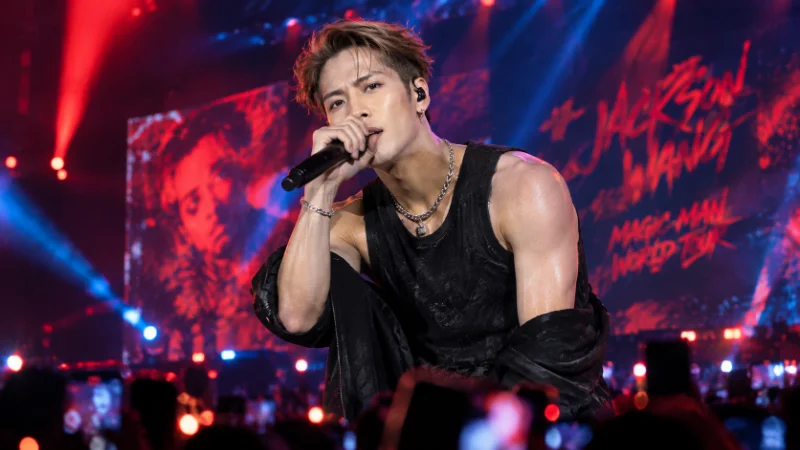
He kept performing at a high level through that stretch, including three straight years at Coachella and a stadium show opening a Manchester United versus Liverpool exhibition match in Bangkok. Then, in December 2023, he stepped away from music entirely to deal with depression and exhaustion, a hiatus he later said lasted close to a year.
Magic Man 2, released in July 2025, is what came out of that break. Wang has described the eleven tracks as diary entries split into four chapters, moving from manic highs through losing control, realization, and acceptance. The album debuted at number 13 on the Billboard 200, the highest mark any Chinese solo artist has reached on that chart, and its world tour ran through Bangkok, North America, and an iHeartRadio Jingle Ball run in Los Angeles and Chicago in December 2025.
Jackson Wang’s Age and Personal Background
As of this writing, Wang is 32 years old. His birthday, March 28, means his age ticks up publicly every spring, so treat any number you find without a clear date as something to double-check.
He grew up moving between Hong Kong, Budapest, Shanghai, and several other cities while fencing competitively, which left him fluent in Mandarin, Cantonese, Korean, and English, plus conversational Shanghainese. In 2025 he said he had started studying Japanese as well. He never finished formal schooling, having dropped out to move to Seoul for idol training in his teens.
Business Empire: Team Wang, Fashion, and Global Brand Deals
Team Wang is the base for everything Wang does outside of music, from the record label itself to Team Wang Design, the fashion line he directs personally. Around that core, he has built one of the more unusual endorsement portfolios in pop music.
Fendi named him a China ambassador in 2019, the same year Cartier and Armani Beauty signed him. L’Oréal Paris Men Expert and Ray-Ban followed in 2020, and Louis Vuitton brought him on as a global brand ambassador in January 2023. In 2024, Hennessy made him a global ambassador and he wrote a song, “Henny,” for the launch of one of its bottles, then closed out the year by signing with Nike and Jordan as a global brand partner and creative director.

His 2025 and 2026 deals leaned into skincare and everyday products, including Asia-Pacific ambassador roles for suncare brand Anessa and skincare company Kans, plus a global ambassador deal with the chewing gum brand Stride. In July 2026, the sport came full circle: the International Fencing Federation named him its first global ambassador, tasked with promoting the sport ahead of the 2028 Los Angeles Olympics.
Jackson Wang’s Net Worth
Wang’s finances are not officially disclosed, and public estimates vary widely enough that any single number should be treated as a rough guide rather than fact. Entertainment and finance sites that track celebrity wealth put the figure anywhere from roughly 20 million to 50 million dollars, depending on how they weigh touring income against brand deals and Team Wang’s business revenue.
What is confirmed is where the money comes from: album sales and streaming, a world tour that sells out arenas across Asia, Europe, and North America, and a stack of ambassador contracts with brands like Louis Vuitton, Nike, and Hennessy layered on top of his own label and fashion line. Because Team Wang is privately run, none of those revenue streams are broken out publicly, which is exactly why the estimates swing as widely as they do.
What Comes Next
The Magic Man 2 World Tour is still running into 2026, and Wang’s new role with the International Fencing Federation puts him in front of a global audience again as the sport heads toward the Los Angeles Olympics. He has also stayed visible off stage, donating to earthquake relief efforts in Tibet and Thailand in 2025 and to fire relief in Hong Kong’s Wang Fuk Court that November.
For an artist who once had to choose between an Olympic dream and a music career, that combination, chart records on one side and an Olympic ambassadorship on the other, is close to having both.