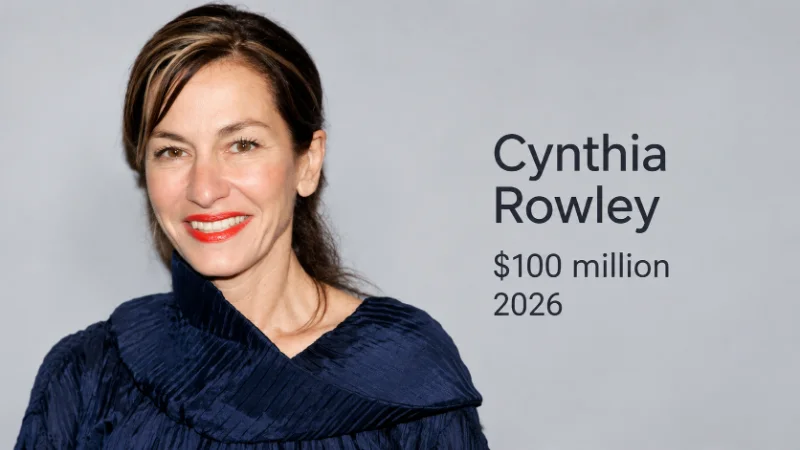
Cynthia Rowley’s net worth is estimated at $100 million, according to Celebrity Net Worth, and outlets such as The List and Soap Central repeat that number. The fashion designer built it from a label she started in the early 1980s with a $3,000 loan from one of her grandmothers.
The more useful story sits in March 2020, when she feared the business might not survive the shutdowns. She cut her store list, shrank production runs and kept the locations where she owned the real estate. That reset explains how her wealth is held better than any single estimate does.
Below you will find where the $100 million figure comes from, why other websites disagree, how the brand earns money, and what her homes, art and family add to the picture.
Cynthia Rowley Net Worth at a Glance
| Category | Details |
|---|---|
| Estimated Net Worth | $100 million (Celebrity Net Worth) |
| Born | July 29, 1958, in Barrington, Illinois |
| Age | 68 in October 2026 |
| Profession | Fashion designer, author, and television personality |
| Education | School of the Art Institute of Chicago |
| Spouse | Bill Powers, an art dealer |
| Children | Kit Keenan and Gigi Clementine Powers |
| Label Base | New York City |
Why Online Net Worth Figures Do Not Match
Most mainstream coverage uses $100 million, but the number is an estimate with no published math. Celebrity Net Worth says it draws on public sources and sometimes on tips from celebrities or their representatives, and it labels every figure an estimate.
Other sites print $50 million to $60 million, $65 million, or even $1 million to $5 million. None of them show a calculation, so those numbers carry little weight.
There is a practical reason nobody can settle the question. No public filings for her company turned up in the research behind this article, and a privately held label does not have to disclose revenue or profit.
Even the main source has loose ends. Its Rowley page shows a last edit in February 2021, and its text puts Kit Keenan’s birth in 1994 while other profiles give May 20, 1999. Birth years for Rowley herself also vary on smaller sites, from 1958 to 1968.
Treat every figure here as a reasoned estimate. This article is not financial or investment guidance, and the real number could sit well above or below $100 million.
How a $3,000 Loan Became a Fashion Label
1: A Childhood Spent Making Things
Rowley grew up in Barrington as one of three children. Her father, Ed, taught science and her mother, Clementine, painted. Celebrity Net Worth adds that one of her grandparents designed the Pabst Blue Ribbon logo.
She made her first dress at age seven, according to the Council of Fashion Designers of America (CFDA). She told Citi Private Bank that her family had little money but made gifts by hand instead of buying them.
2: Selling Clothes Before Graduation
Cynthia Rowley enrolled at the School of the Art Institute of Chicago as a painter, then switched to fashion because painting felt too solitary. She has described wearing her own jacket on a Chicago train when a stranger handed her a business card and asked her to bring a collection to an office on Monday.
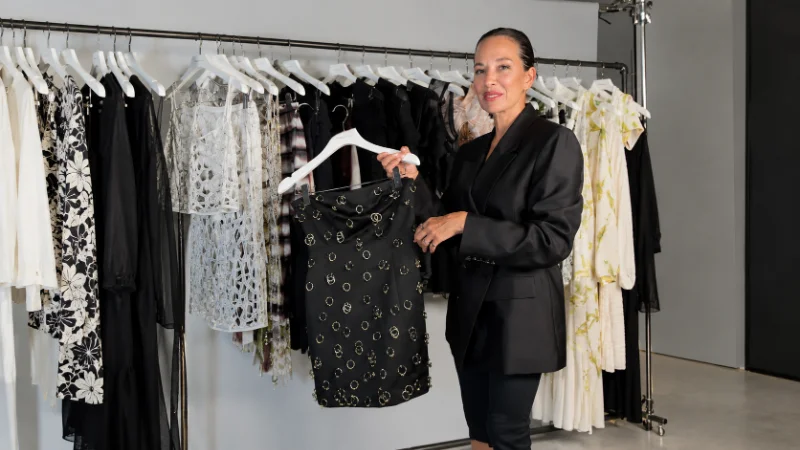
She sewed five pieces that weekend, priced them very low, and the buyer came back for more. In the early 1980s she started her own line with a $3,000 loan from a grandmother, and her first New York show drew none of the editors or celebrities she had invited, per Celebrity Net Worth.
Her company incorporated in 1988, the year most profiles use as the label’s start.
3: The Award That Came With Bad News
In 1994 the CFDA gave Rowley its Perry Ellis Award for New Fashion Talent, even though she had already worked in the business for about 12 years, according to Encyclopedia.com. She told Citi Private Bank that her accountant phoned the very next day and suggested she quit.
The same year, Forbes named her a New York finalist for Entrepreneur of the Year, per the same reference entry. She stayed in, and the label kept adding categories.
Where the Money Comes From
Income at the Cynthia Rowley label comes from a brand that stretches well past dresses. The CFDA’s member profile lists womenswear, menswear, eyewear, handbags, shoes, swimwear, furniture, rugs, tech accessories, bridal and beauty, sold through department stores, specialty shops, online and her own boutiques. Because the company is private, read this list as the sources of revenue and not as a split of the estimate.
1: Collaborations With Big Names
Rowley was one of the first designers to work with Target, launching the Swell home line in 2003. Swell grew out of a book series she wrote with Ilene Rosenzweig, whose first volume appeared in 1999.
She also designed the first set of designer Band-Aid bandages with Johnson & Johnson and put her name on Timex watches. Menswear arrived in 2011 with the Mr. Powers collection, named for her husband.
2: Wetsuits and Other Unlikely Products
Her best-known surprise came from the water. While surfing off Montauk, she met an executive from Quiksilver Roxy who asked her to design something for them, and the two teamed up on a wetsuit line.
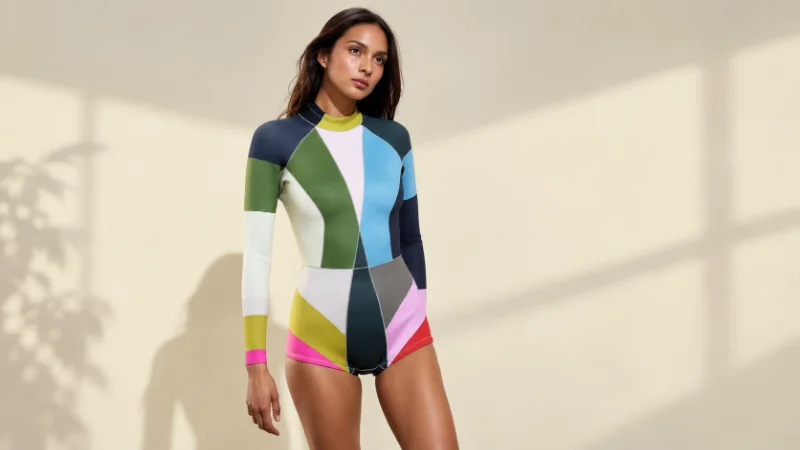
Factories doubted her idea, so she learned how wetsuits are built and had the outer layers printed in Como, Italy, before grafting them on. Wetsuits are now a fixture of every collection, and she says many buyers have never surfed. Wallpaper was the newest extension when Citi Private Bank profiled her.
3: Books, Television and a Podcast
Rowley’s books include Swell: A Girl’s Guide to the Good Life (1999), Home Swell Home (2002), Swell Holiday (2003), The Swell Dressed Party (2005) and Slim: A Fantasy Memoir (2007). She has also appeared as a style authority on Project Runway, America’s Next Top Model and 24 Hour Catwalk, per the CFDA.
In 2019 she and her daughter Kit began the Ageless podcast, which covers fashion, business, wellness and motherhood. These ventures add media income and name recognition, though no source discloses how much.
The Design Philosophy That Sells the Brand
Cynthia Rowley has said she wants customers to want the experience and not the idealized woman in the ad. In her telling to Citi Private Bank, the clothes exist to push women toward something new, such as a first ski trip, a golf lesson or a night in a favorite dress.
That idea explains why the label sells wetsuits to people who do not surf. It also explains the runway shows, which she describes as entertainment first, built around risk and fun.
Sustainability sits inside the same approach. Her surf and swimwear lines used limestone-based neoprene and recycled materials in place of petrochemicals, according to the same profile, which cuts water use and carbon output.
The 2020 Reset Behind the Business
In mid-March 2020, with the world heading into shutdown, Rowley wondered whether her label had a future. She recalled telling herself on a Friday, “that was a nice career I had there.” By Monday she was planning a rebuild with a few team members, according to Citi Private Bank.
What She Changed
She kept only the best stores and the ones where she owned the real estate. The team began planning three months out, making small quantities quickly and using data to decide when to restock.
Choosing which stores to keep meant choosing which cities mattered most. Owned buildings gave her a fixed cost she controlled, which matters when sales swing.
Rowley says this ended overproduction and led to more full-price sales with no leftover inventory piling up in warehouses. That is her own account, and the company has not published figures to test it.
What It Means for Her Wealth
This section is analysis, not reported fact. A smaller store list tied to owned property suggests that more of Rowley’s wealth sits in real estate and brand value than in unsold stock.
It also means a headline estimate should be read as a snapshot of a business that deliberately shrank its footprint in 2020. A figure last refreshed in 2021, as the main source’s was, may miss that shift entirely.
Real Estate and Art
Celebrity Net Worth reports that Cynthia Rowley bought her West Village townhouse in 2014 for $11 million and used it as a live-work space for the brand. She sold it in March 2019 for $14 million after first asking $18 million. That $3 million gap is paper appreciation before fees, taxes and renovation costs, so it is not profit.
The same source says public records show at least two other New York City properties linked to her. No outlet reports their values.
Rowley and Kit also collect art, mostly by women artists, and her husband works as an art dealer. Collections like this can add to net worth, but nothing public puts a value on hers.
Family, Podcast and Public Attention
Cynthia Rowley’s first husband, photographer Tom Sullivan, died of brain cancer in 1994 at age 32. She later married Brooklyn sculptor William Keenan Jr., and their daughter Kit was born in 1999.
She married art dealer Bill Powers in 2005, and their daughter Gigi Clementine was born that year. Kit launched her own clothing line, KIT, in 2018.
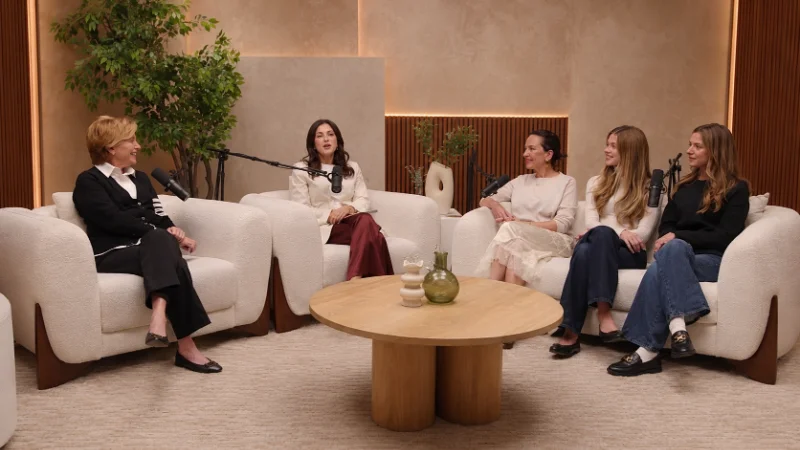
Interest in her wealth jumped after Kit appeared on season 25 of The Bachelor in 2021, when outlets such as Screen Rant and Cheat Sheet quoted the $100 million estimate. Kit has since denied online claims that her mother helped buy her New York penthouse, according to Soap Central, and credited her mother’s career with opening doors.
Industry Impact and Legacy
Rowley’s lasting contribution is proof that a designer label can stretch into unlikely shelves without losing its voice. Target, Band-Aid, Timex and Quiksilver Roxy partnerships came before collaborations became routine across the industry, and she was one of the original Target designers in 2003.
Her second contribution is the 2020 playbook. Small runs, three-month planning windows and data-led restocking are practices many brands adopted later, and she described them while the pandemic was still fresh.
What separates her from peers is the mix of art school craft, surf culture and a willingness to shrink on purpose. Few designers with a four-decade history talk about cutting stores as a strength.
Awards and Industry Footprint
Honors for Cynthia Rowley include the CFDA Perry Ellis Award in 1994, the School of the Art Institute of Chicago’s Legend of Fashion Award in 2012 and the American Image Awards’ Designer of the Year in 2015.
The CFDA profile counts about 60 Cynthia Rowley shops worldwide, but the page is undated and the figure appears to predate her 2020 decision to keep only the strongest locations. Wikipedia lists current stores in New York City, Montauk, Houston, Greenwich, Connecticut and Newport Beach, so check the brand’s website for the latest list.