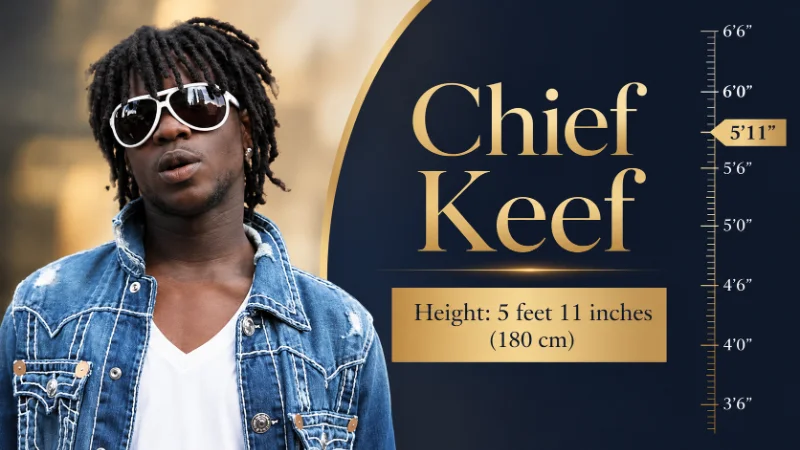
Chief Keef is a Chicago rapper and producer, born Keith Farrelle Cozart on August 15, 1995, who is widely credited with carrying drill music out of the South Side and into the American mainstream. He did it as a teenager under house arrest, through YouTube videos that spread faster than any label could manage.
At 31, he is still releasing music and still touring, and in 2026 he is back in the news for a pop crossover nobody predicted. This profile follows the turning points: the song that broke him, the major-label deal that never matched his influence, the years of independent output, and the comeback now underway.
Early Life on Chicago’s South Side
XXL reports that Keef was born to a teenage mother, and The Urban Daily places his upbringing in Englewood, a rough South Side neighborhood. He dropped out of school at 15, according to The Urban Daily.
Bored Panda’s profile says his grandmother, Margaret Carter, was his legal guardian and that he began rapping at age five on his mother’s karaoke machine. That profile is AI-assisted, so treat those details as a claim, not a confirmed record.
By his mid-teens he was recording seriously. He goes by several names, including Sosa, Chief Sosa and Almighty Sosa, and the Glo Gang crew around him grew out of the earlier Glory Boyz Entertainment collective.
The House Arrest Videos That Started It All
Keef’s first break came while he was confined at home on a weapons violation, The Urban Daily reports. With the street off limits, he posted videos of himself rapping on YouTube, and the clips found an audience among Chicago teenagers.
XXL credits the 2011 mixtapes The Glory Road and Bang with building his local following. Back From the Dead followed on March 12, 2012.
The song that changed everything was “I Don’t Like,” featuring Lil Reese. Mic reports it dropped on March 11, 2012, the same week his songs became the unofficial soundtrack of the SXSW festival in Austin. Pitchfork, XXL and Complex were already covering him by then.
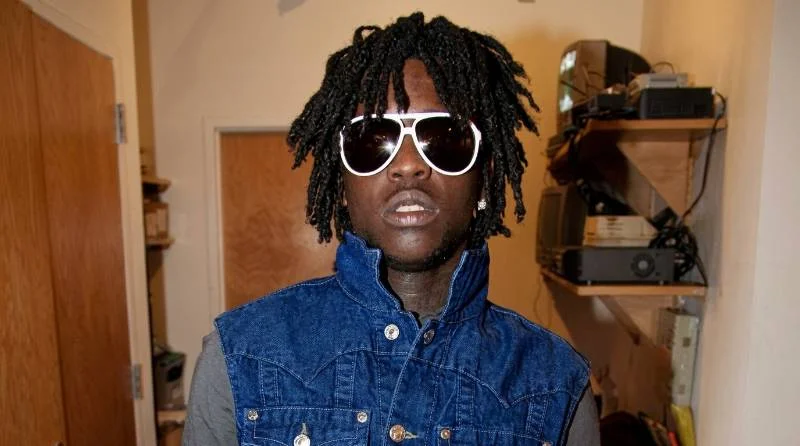
The video explains some of the appeal. Hot New Hip Hop describes a sparsely furnished apartment where a young Keef leads a crowd of friends through plainly unpolished moments. There was no budget to hide behind, which made it feel unfiltered to viewers.
The Kanye West Remix That Changed the Scale
Kanye West heard the song and offered to remix it. Mic reports that Fake Shore Drive premiered the remix on May 1, 2012, and it later appeared on the GOOD Music compilation Cruel Summer as “Don’t Like,” with Keef, Pusha T, Big Sean and Jadakiss.
Rolling Stone says the remix put a global spotlight on Chicago’s drill movement. The Outline adds a complication: the remix both propelled and obscured Keef’s original. Casual listeners met a Kanye West song, while Chicago listeners knew whose record it was.
Keef has answered the credit question himself. Hot New Hip Hop says his song “Drifting Away” takes a shot at West over who gets credit for drill, with a line that says Chief Sosa made it and West thinks he did too. Wikipedia’s account of the period adds that by late 2012 West, Drake and Rick Ross were all working with drill artists, and that West cited the sound as an influence on Yeezus.
The original charted on the Billboard Hot 100, according to Wikipedia’s discography. According to a Boardroom retrospective, Keef signed a $6 million deal with Interscope Records within about six weeks of the single’s release.
Finally Rich and the Sales Paradox
His debut album, Finally Rich, came out on December 18, 2012, through Interscope and Glory Boyz Entertainment. It debuted at number 29 on the Billboard 200 with 50,000 copies sold in its first week, according to Billboard figures reported by Complex.
XXL notes that Young Chop, one of his earliest collaborators, produced more than half of the record. Uproxx and other outlets treated the sales number as a disappointment. It was a fair reading of the sales and a poor reading of the moment.
The Outline quotes Larry Jackson, the executive who signed Keef to Interscope, saying that week after week Keef was the most active social media artist the label had. Danny Brown told Pitchfork in 2013 that Keef was “totally punk rock,” as The Outline recounts.
That gap, small sales and large cultural weight, is the strangest feature of his career. Keef has said, in an interview that Wikipedia’s drill music entry quotes, that he skips metaphors and punchlines on purpose and writes about what is happening right now. Critics later read that plain style as an innovation, and many younger rappers copied it.
Leaving Interscope and Building Glo Gang
In October 2014, Interscope and Keef parted ways. The Fader reported that the label had quietly distanced itself after a run of legal problems, and Complex noted that Keef confirmed on Twitter he had been dropped about a week earlier.
The timing was awkward. Back From the Dead 2 was due on October 31, 2014, and it came out on Glo Gang, not Interscope. He also began experimenting with producing his own music that year, according to Wikipedia.
What followed was a flood of independent releases. AllMusic’s biography notes that he put out five mixtapes a year in 2017 and 2018, among them Two Zero One Seven, Thot Breaker and Mansion Musick. He teamed up with Gucci Mane on Big Gucci Sosa in 2014, and later with Zaytoven on GloToven in 2019. The long-awaited Bang 3 had missed its planned Christmas 2014 release, as Wikipedia’s account of the period notes, and AceShowbiz lists it among his 2015 albums.
The long grind paid off in 2024. Almighty So 2, released on May 10 through his 43B label, reached number 30 on the Billboard 200, and Hot New Hip Hop put its first-week total at almost 23,000 units. It was a follow-up to a fan favorite from 2013, and it landed during what the outlet called a career renaissance.
The Hologram Concert Chicago Would Not Allow
One episode shows how city officials treated him at his peak. In July 2015, Keef planned a benefit show after Marvin “Capo” Carr, a Glo Gang affiliate, was shot and killed, according to XXL.
ABC7 Chicago reports that Mayor Rahm Emanuel’s office asked the Red Moon Theatre to cancel the original concert. Organizers moved it to Craze Fest in Hammond, Indiana, and Keef appeared there as a hologram beamed from California, as Digital Trends and Engadget describe.
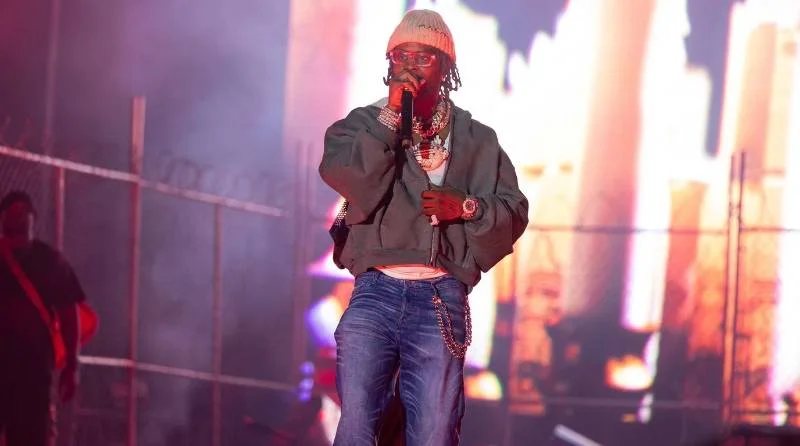
Police shut the show down after a single song, according to The Washington Times. Complex, citing The New York Times, reported that more than 2,000 fans were cleared from the park with no arrests or incidents.
Keef did not appear in person because of arrest warrants tied to child support cases, FACT reported. Hammond’s mayor told reporters he would not invite someone he viewed as a threat to public safety.
Whatever one thinks of that call, it shows something unusual. Officials were uneasy about a concert that existed only as light projected on a stage.
Influence on the Next Generation of Rappers
Keef’s reach shows up in other artists’ records. He appears on the hook of “Hold My Liquor” on Kanye West’s Yeezus, as Georgia Public Broadcasting noted, and Wikipedia lists his guest verses on Lil Uzi Vert’s “Bean (Kobe)” and Drake’s “All the Parties” as Hot 100 top 40 entries.
Hot New Hip Hop points to younger artists such as Sexyy Red as admirers who treat him as a legend. The Outline went further in 2018 and argued that, in the years since he emerged, his influence on the sound and tone of hip hop had outweighed that of nearly anyone else.
His story is not free of criticism. The Urban Daily noted his March 2014 arrest for driving under the influence, and Reason, citing The New York Times, noted his history of rapping about gang life. Drill’s critics and defenders have argued over those themes ever since.
What Chief Keef Is Doing in 2026
His 2026 has been busy. He released the mixtape Skeletor, according to Complex, and AllMusic’s biography notes “Shake Dat” with Mustard in 2025 and “Harry Potter” in 2026. Wikipedia’s discography also lists “Rooms,” a 2026 single with Mike WiLL Made-It and YoungBoy Never Broke Again.
The surprise was Katy Perry. Complex reports that the two feuded on Twitter in 2013 after Perry joked about the title of his breakout song “Hate Being Sober.” Keef later sampled her song “Legendary Lovers” on his track “Save Me.”
In May 2026, they released a remix called “Legendary Lovers (Save Me),” and Billboard covered the release 13 years after the feud. Perry teased the link-up on TikTok first.
She kept the joke going afterward. Vice reports that Perry referenced the friendship again in July 2026 while closing a run of European festival dates. Complex, citing Newsweek, noted that streams of “Legendary Lovers” on Spotify jumped 70 percent in a single day on March 23, weeks before the remix arrived.
Then came the road. Complex announced the 19-date Chief Keef Live 2026 tour, his first national headlining run since 2024. The Source reported that it opened with Chicago’s first hometown headlining show for Keef in 14 years, and that it was set to close on October 28 at Brooklyn Bowl in Las Vegas. Pollstar said the opening night sold out and later reported added stops, including the Roxian Theatre in Pittsburgh on October 12.
Chief Keef’s Height, Age, and Net Worth
Keef turned 31 on August 15, 2026. No official height has been published. Many biography sites list him at about 6 feet (183 cm), Does Height Matter gives 5 feet 10 3/4 inches (180 cm), and The Urban Daily once cited 5 feet 9 inches, so treat the figure as an estimate.
Net worth is also an estimate. Celebrity Net Worth puts it at $4 million, while other sites list as little as $1 million. Neither number comes from Keef or an audited source, and the figure will need updating as his touring income becomes clearer.
Why Chief Keef Still Matters
Keef’s case is hard to compare with other rappers. He had a viral hit, a Kanye West co-sign and a seven-figure label deal before he turned 18, and the industry spent the following decade catching up to what he had already done.
The more useful comparison is with the artists he influenced. They took his plain delivery, his social media habits and his refusal to polish the sound, then turned those traits into a standard that the genre now follows.
His long independent run also matters. He kept releasing music after the label left, built his own imprints, and earned a charting album a decade after his debut.
The 2026 tour suggests the audience never left. It simply took the rest of the industry some time to arrive.