
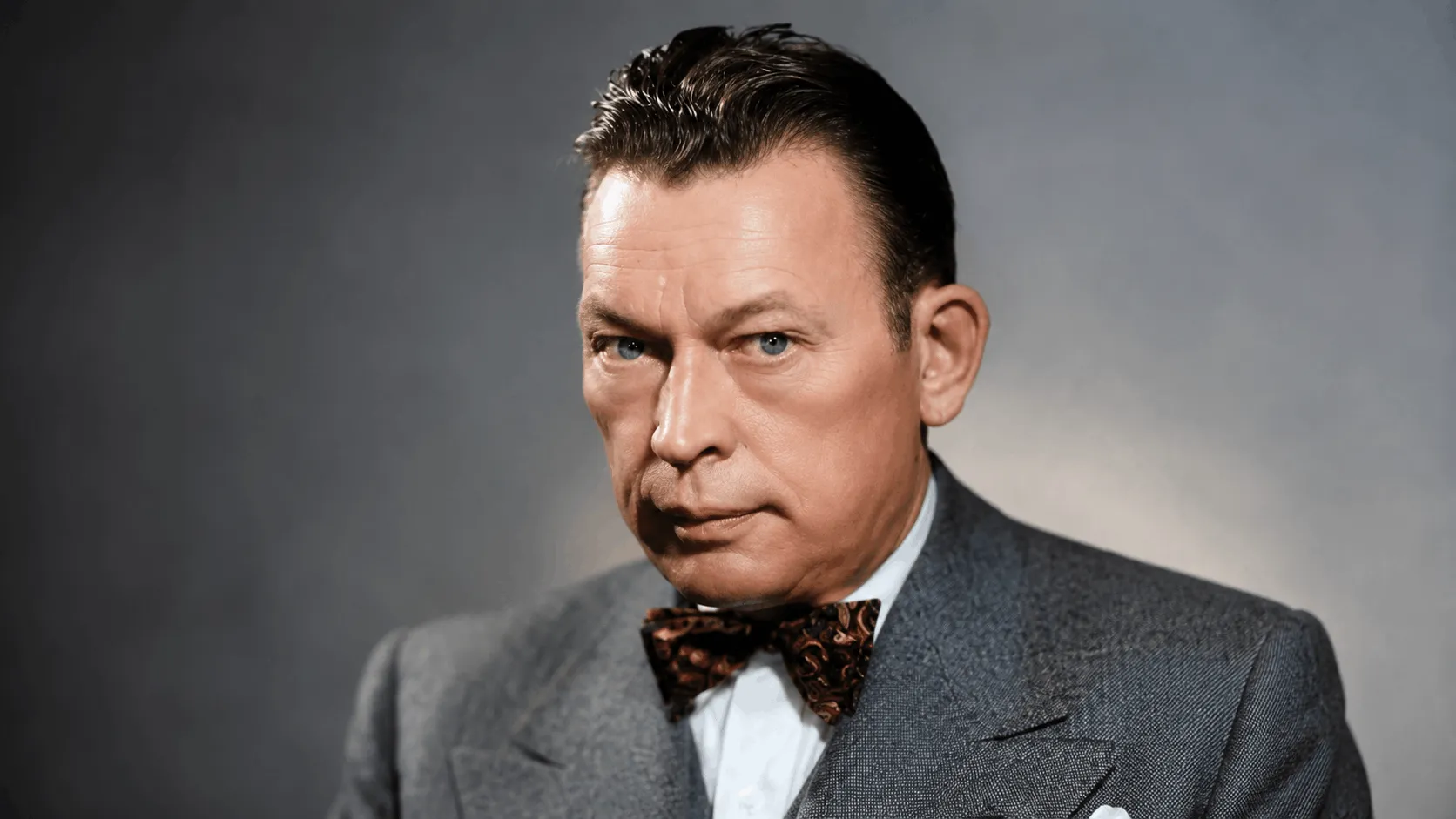
Fred Allen was an American comedian, born John Florence Sullivan, whose sharp, topical wit made him one of the most admired performers of radio’s golden age. Best known for his long-running program and his mock feud with fellow comedian Jack Benny, Allen spent four decades moving from vaudeville stages to network microphones and eventually to early television panels. He died in 1956, but his style of ad-libbed, self-aware comedy still shapes how television hosts write and perform today.
Quick Facts
| Detail | Information |
| Birth name | John Florence Sullivan |
| Born | May 31, 1894, Cambridge, Massachusetts |
| Died | March 17, 1956 (age 61) |
| Occupation | Comedian, radio host, writer |
| Known for | The Fred Allen Show, Allen’s Alley, feud with Jack Benny |
| Spouse | Portland Hoffa (married 1927) |
Early Life and Background
Allen barely knew his mother, Cecilia Sullivan, who died of pneumonia when he was not yet three. He and his younger brother were raised largely by an aunt he called Aunt Lizzie, a period he later wrote about at length in his memoirs. The household moved often, and Allen took odd comfort in books, eventually landing a job at the Boston Public Library.
It was at the library that Allen found a book on the history of comedy and taught himself to juggle. A coworker’s offhand suggestion that he “ought to go on stage” set his path. By 1914, at age 20, he had booked his first vaudeville dates under the name Fred St. James, billing himself as the world’s worst juggler.
Vaudeville and Broadway Career
Allen refined his act over the next several years, leaning less on juggling and more on monologue comedy built around wordplay. In 1917 he adopted the stage name that stuck: Fred Allen, borrowed from a theater booker named Edgar Allen. The change let him escape the low pay theater owners had grown used to offering “Freddy James.”
Through the 1920s Allen worked steadily in touring revues and Broadway shows, including The Little Show and Three’s a Crowd. It was during a Shubert Brothers production that he met Portland Hoffa, a chorus performer he married in 1927. The two would work together for the rest of his career, with Hoffa’s onstage catchphrase, “Mr. Allll-llennnn,” becoming a signature of his eventual radio program.
Rise to Radio Stardom
Allen’s radio debut came almost by accident, while he and Hoffa waited for a promised Broadway role. Their guest appearances on a Chicago station built enough of a following that live audiences wanted to see them in person. That early taste of broadcast popularity led to his first regular radio series in 1932.
Over the next several years the show changed names and sponsors repeatedly, from The Linit Bath Club Revue to The Salad Bowl Revue to Town Hall Tonight, which ran from 1935 to 1939. Town Hall Tonight became the longest-running hour-long comedy program in classic radio, and it gave Allen room to build the small-town, satirical voice that would define the rest of his career.
By the 1946 to 1947 season, The Fred Allen Show had become radio’s top-rated program, and NBC signed him to a lucrative new contract largely to keep him from following rival stars to CBS. That dominance did not last. A year later, the quiz show Stop the Music, which required listeners to answer live phone calls for cash prizes, pulled enough of his audience away that Allen slipped to number 38 in the national ratings. He tried fighting back by offering five thousand dollars to any listener who missed a Stop the Music call while tuned to his own show, though he never had to pay out.
The Fred Allen Show and Allen’s Alley
In 1939, sponsor Bristol-Myers renamed the program The Fred Allen Show, and by 1940 Allen had moved networks to host Texaco Star Theater. His most enduring creation arrived on December 6, 1942: a recurring segment called Allen’s Alley, in which he strolled through a fictional small-town street and knocked on the doors of recurring characters.
Those characters became genuine cultural figures in their own right. Blustery Senator Beauregard Claghorn, stoic farmer Titus Moody, sharp-tongued housewife Pansy Nussbaum, and pompous poet Falstaff Openshaw each carried catchphrases that listeners quoted across the country. Claghorn in particular went on to inspire the Warner Bros. cartoon character Foghorn Leghorn, which debuted the following year.
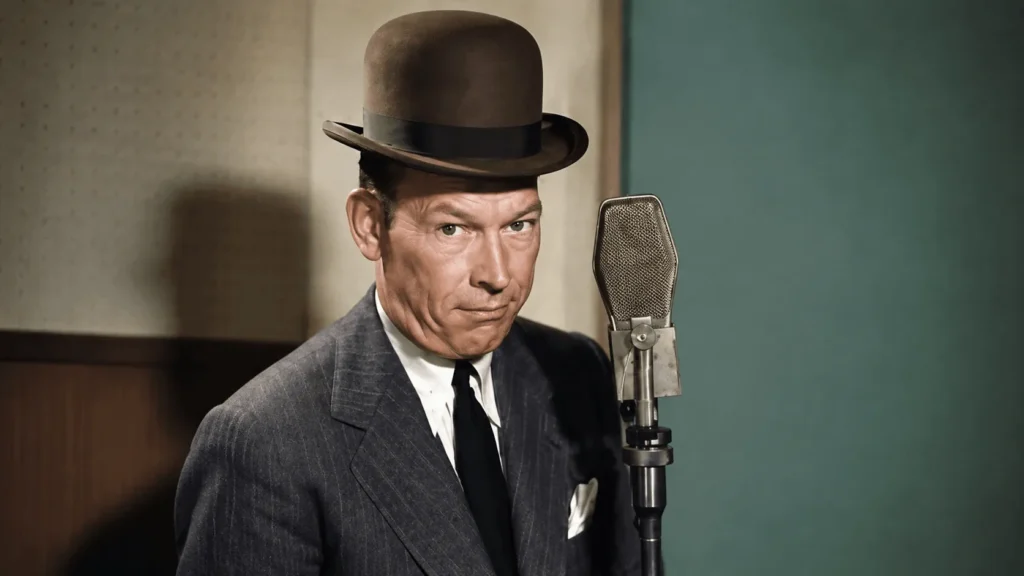
Allen wrote and rewrote nearly every script himself, often working twelve hours a day even though he employed a small writing staff. That workload, combined with ongoing battles with network censors over jokes involving real people, professions, and even fictional towns, took a toll on his health. Hypertension eventually forced him off the air for more than a year in the mid-1940s.
Battles With Radio Censors
Few comedians of his generation clashed with network censors as often as Allen did, largely because his humor leaned on real names, real professions, and real small-town types. Critic John Crosby of the New York Herald-Tribune noted that the network staffer assigned to review Allen’s scripts often admitted he did not understand the jokes he was cutting.
The disputes ranged from the minor to the absurd. Allen was once barred from calling socialite Brenda Frazier’s wedding gown lovely without direct family permission, and he was separately ordered to change a ship’s officer character from a Cockney accent to something the network considered more dignified. He also had to defend keeping the Jewish-dialect character Pansy Nussbaum on the air after NBC worried the portrayal might cause offense, and he was told never to reference a fictional town called North Wrinkle unless he could prove no real town shared the name. Allen later suggested that the ongoing friction with censors likely worsened the hypertension that repeatedly sidelined him.
The Feud With Jack Benny
Allen’s most famous bit began almost by accident in 1937, after a young violinist’s polished performance on his show prompted an offhand joke about “a certain alleged violinist.” Jack Benny, listening at home, took it personally on air, and the two traded barbs for the next decade. Both men later admitted their writers coordinated the routines behind the scenes.
The mock rivalry produced some of radio’s most quoted exchanges and even led to a proposed boxing match that sold out tickets before being called off. Allen and Benny appeared together in two films, Love Thy Neighbor and It’s in the Bag!, and kept the joke alive on television as late as 1953. When Allen died in 1956, Benny said publicly that the friendship behind the feud had always been real.
Film and Television Work
Allen made occasional movies throughout his radio years, starting with a short adaptation of one of his stage bits in 1929. His two features for 20th Century-Fox, Thanks a Million and Sally, Irene and Mary, cashed in on his radio fame, and his sole leading role came in the comedy It’s in the Bag!
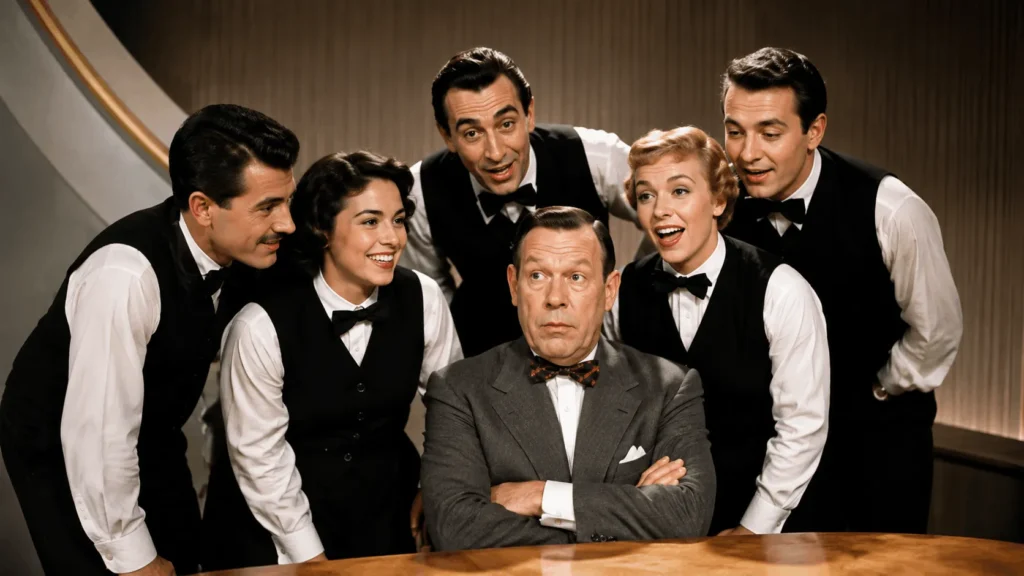
Television proved a harder fit. Allen hosted rotating segments of The Colgate Comedy Hour and later fronted a game show called Judge for Yourself, but neither matched his radio success. He was famously skeptical of the format, once joking that television counted as “a medium” because “nothing is well done.” Despite that, he found a steady home from 1954 until his death as a panelist on the game show What’s My Line?
Later Years, Writing, and Death
After stepping back from weekly radio, Allen turned to writing. His 1954 book Treadmill to Oblivion, which reviewed his radio and television years, became the best-selling account of the classic radio period for years afterward. He was working on a second memoir, Much Ado About Me, covering his vaudeville years, when he died.
On the night of March 17, 1956, Allen suffered a heart attack while taking his usual late-night walk near his New York apartment. He was 61. A widely repeated story claimed he collapsed while walking his dog, but his biographer later confirmed Allen never owned one.
Legacy and Honors
Allen holds two stars on the Hollywood Walk of Fame, one for radio and one for television, and he was inducted into the National Radio Hall of Fame in 1988. A pedestrian passage in Boston’s Theater District carries the name Allen’s Alley in his honor.
His influence reaches well past his own era. Comedians and writers including Groucho Marx, Johnny Carson, and the creators of Saturday Night Live have credited his satirical news segments and rapid ad-libbing style as a direct forerunner of their own work. Herman Wouk, who later became a novelist, got his professional start writing scripts for Allen’s program, and Allen’s technique of turning an awkward silence into an ad-libbed joke became a template Carson used decades later on late-night television.
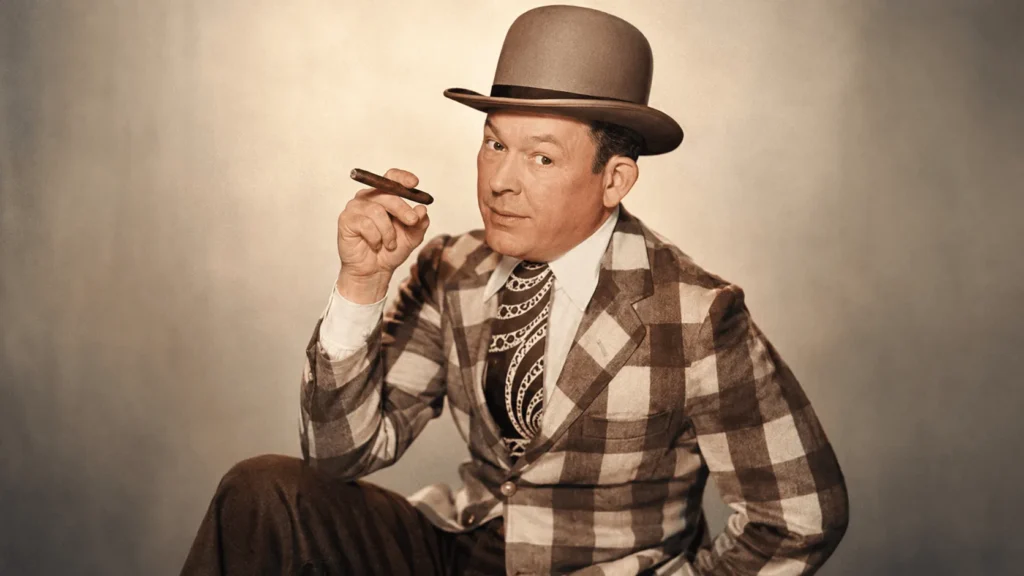
In 1977, Allen was also named to the NAB Broadcasting Hall of Fame alongside Jack Benny, recognition that placed his radio partnership with his longtime rival on equal footing in broadcasting history. Fred Allen’s willingness to push back against censors and sponsors, while still filling a network hour with genuinely sharp writing, remains a reference point for anyone studying the history of American comedy.