
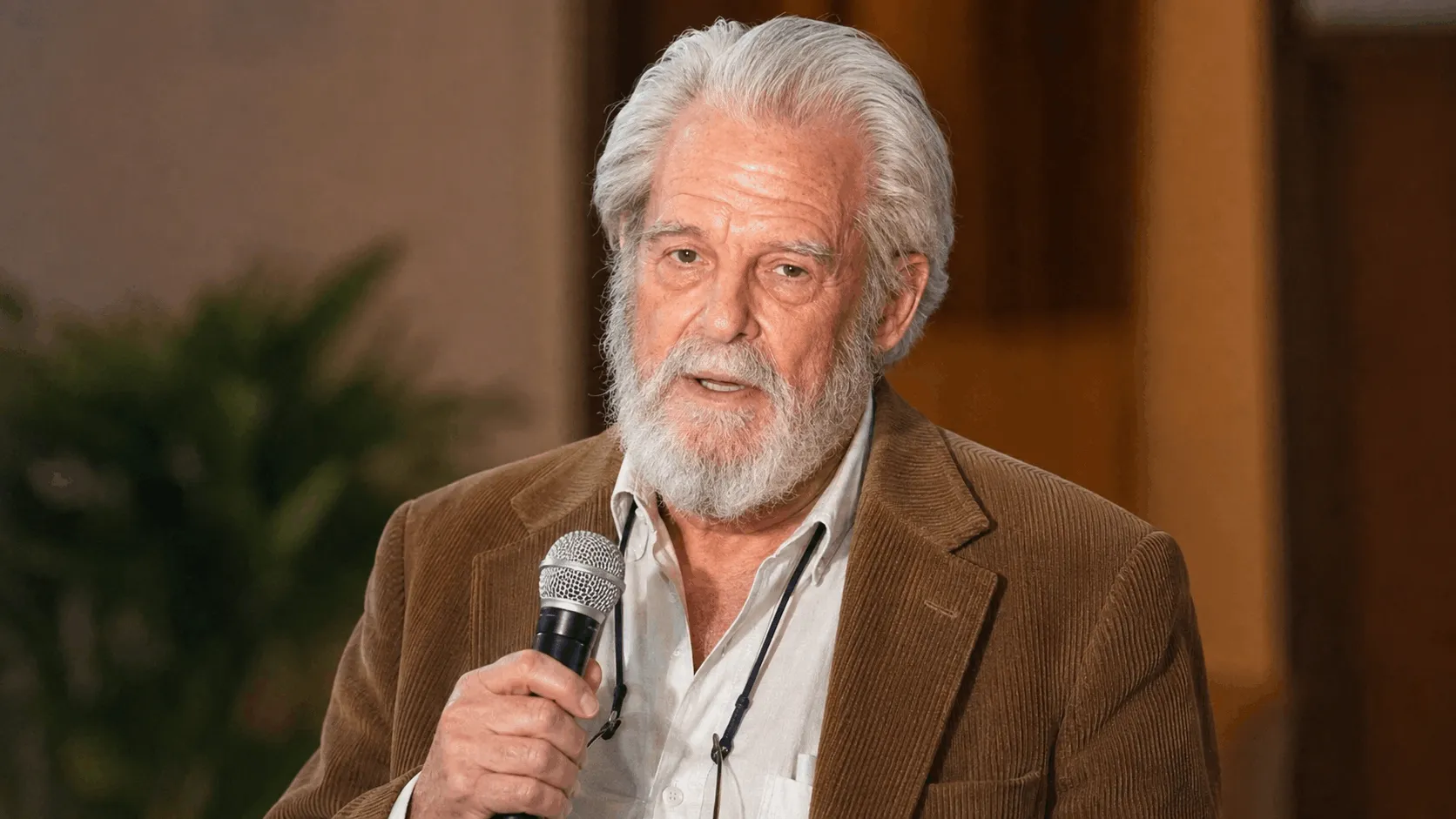
Corey Allen spent roughly five decades working in film and television, first as an actor and then as a director whose credits stretch from courtroom dramas to a Star Trek spinoff. No financial outlet or estate record has published a sourced net worth figure for him, so any number circulating online should be treated as a guess rather than a fact.
Quick Facts
| Detail | Information |
| Full Name | Alan Cohen (professionally known as Corey Allen) |
| Born | June 29, 1934, Cleveland, Ohio |
| Died | June 27, 2010, Los Angeles, California |
| Occupation | Actor, television director, producer, writer |
| Years Active | 1954 to 2009 |
| Best Known For | Buzz Gunderson in Rebel Without a Cause (1955) |
| Primary Income Source | Television directing fees and residuals |
| Net Worth | Unconfirmed; no verified figure has been published |
Early Life and Background
Corey Allen was born Alan Cohen in Cleveland, Ohio, and moved west to attend the University of California, Los Angeles, where he studied theater. He graduated with a Bachelor of Fine Arts in 1954 and picked up the department’s Best Actor award along the way. While still a student, he starred in the UCLA short film “A Time Out of War,” which went on to win an Academy Award along with honors at the Cannes and Venice film festivals.

After graduation, Allen worked through roughly twenty stage productions around Los Angeles before director Nicholas Ray cast him in a role that would define how most people remember him.
Career and Income Breakdown
1: The Acting Years
Allen’s breakout role came in 1955, when he played Buzz Gunderson, the leather-jacketed rival to James Dean’s character in Rebel Without a Cause. The part was small in screen time but large in cultural weight, and it opened doors to roughly a dozen more film roles over the next several years, including Party Girl, Darby’s Rangers, Private Property, Sweet Bird of Youth, and The Chapman Report. He also picked up television work on anthology and drama series such as Perry Mason and Alfred Hitchcock Presents. His long run across television and supporting film roles also places him in the same broad tradition of working character actors as Norman Alden.
Acting income in that era came from studio contracts and per-episode television fees rather than the syndication residuals actors rely on today, so these early years likely represented modest, inconsistent pay rather than a lasting fortune.
2: The Directing Years
By the late 1960s, Allen had shifted away from acting and toward directing, a move that ended up defining the bulk of his working life. He spent close to three decades directing for television, building a résumé that included three feature films (Avalanche among them) and dozens of episodic television credits. That era also produced many durable character actors, including Jack Albertson, whose career stretched from stage work into major film and television roles.
His most recognized stretch of work came on Hill Street Blues, where he was nominated for a Primetime Emmy Award for Outstanding Directing in a Drama Series in 1981 and won the same category in 1984 for a later episode of the show. He also received Directors Guild of America nominations for his work on The Streets of San Francisco and Hill Street Blues, along with a CableACE Award in 1984 for an episode of The Paper Chase.
Later in his directing career, Allen created pilot episodes for several series, including Star Trek: The Next Generation, Murder, She Wrote, Simon & Simon, Capitol, and Code Name: Foxfire. His work on the Star Trek: The Next Generation pilot also earned a Hugo Award for Best Dramatic Presentation in 1988. He directed the television movie The Ann Jillian Story, which won an Emmy, and continued directing episodic television through the mid-1990s.
Steady, decades-long directing work of this kind, especially on hit network shows, typically comes with union-scale fees plus residuals for reruns and syndication. That combination is a far more consistent income stream than film acting, and it likely accounts for most of whatever estate Allen left behind.
3: Teaching and Later Work
Outside of directing assignments, Allen also worked as an acting instructor. He taught at the Actors Workshop for three years and later spent nine years running cold reading workshops at the Margie Haber Studio. Late in his career, he received an honorary Doctorate of Humane Letters from Columbia College Hollywood for helping build the school’s acting and directing curriculum. Teaching and workshop fees of this kind are typically modest compared to television directing income, but they added a secondary revenue stream during his later years.
Income Sources
Television directing fees for episodic work across dozens of series between the late 1960s and mid-1990s.
Based on his documented career, Allen’s income likely came from a handful of sources:
Directing residuals from syndicated reruns of shows he directed, particularly Hill Street Blues and his Star Trek: The Next Generation pilot.

Feature film acting and directing fees, concentrated mostly in the 1950s through early 1960s for acting and later for the films he directed.
Teaching and workshop income from acting instruction in the final decades of his career.
None of these figures have been publicly disclosed, so it isn’t possible to attach real dollar amounts to any of them without guessing.
What Is Corey Allen’s Net Worth
This is the honest answer: there isn’t a reliable one. No probate filing, estate disclosure, or credible financial publication has put a verified number on Corey Allen’s net worth, either at the time of his death in 2010 or since. Some low-traffic celebrity net worth sites list rough estimates, but none cite an actual source, which is a common problem with older or lesser-known industry figures who never had their finances covered by mainstream outlets.
Rather than repeat an unsourced guess, it’s more accurate to say that Allen’s estate was almost certainly built on decades of steady, mid-tier television directing fees and residuals rather than the blockbuster paydays associated with A-list stars. That’s a very different financial profile than someone selling out arenas or headlining franchise films, even if the name recognition from one role, Buzz in Rebel Without a Cause, has outlived almost everything else on his résumé.
How Allen’s Career Compares to His Peers
Compared with other cast members of Rebel Without a Cause, Allen’s career took an unusual path. James Dean died before the film’s release and became a cultural icon whose estate has continued to earn licensing income for decades. Natalie Wood went on to a long, high-profile acting career of her own. Allen, by contrast, stepped away from acting relatively early and built a second, quieter career behind the camera.
That path meant less public visibility but arguably more career stability. Directors with steady network television work, especially those attached to acclaimed shows like Hill Street Blues, tend to have longer, less volatile earning years than film actors whose income depends on landing the next role. Allen’s Emmy win and multiple Guild nominations suggest he was well regarded within the industry, even if he never became a household name the way some of his Rebel Without a Cause co-stars did.
Legacy and Continued Recognition
Allen’s single most cited scene, the “chickie run” drag race against James Dean’s character, has been analyzed and referenced in film writing for decades. That kind of ongoing cultural footprint doesn’t generate direct income the way a licensing deal or a syndication residual does, but it kept his name attached to one of the defining films about postwar youth culture long after he had moved on to directing.
His transition behind the camera also left a documented professional legacy. The Directors Guild nominations, the Hill Street Blues Emmy, the Hugo Award tied to the Star Trek: The Next Generation pilot, and his later teaching work at the Margie Haber Studio all point to someone who stayed active and respected within the industry across two distinct careers, not just the one role most people remember him for.
When Allen died in 2010, the Television Academy publicly noted his Emmy win and his decades of directing work, and outlets covering the news framed him primarily as a television director who had also been part of a landmark film, rather than the reverse. That framing matters for understanding his finances too. The bulk of his working life, and very likely the bulk of whatever he earned, came from behind-the-scenes television work that rarely makes headlines, not from the one screen credit most searches for his name are really about.
Why No Verified Number Exists
Net worth figures for major current celebrities usually come from a mix of public deal disclosures, real estate records, and financial reporting built up over years of media coverage. Allen never had that level of ongoing financial scrutiny while he was alive, and no estate filing connected to his death has been made public. Television directors from his era also rarely had the kind of endorsement deals, business ventures, or public stock holdings that make wealth easier to estimate for other public figures.
That combination is exactly why any specific dollar figure attached to his name online should be read with skepticism. Until a verifiable source publishes one, the responsible answer is that his net worth is simply unknown.