
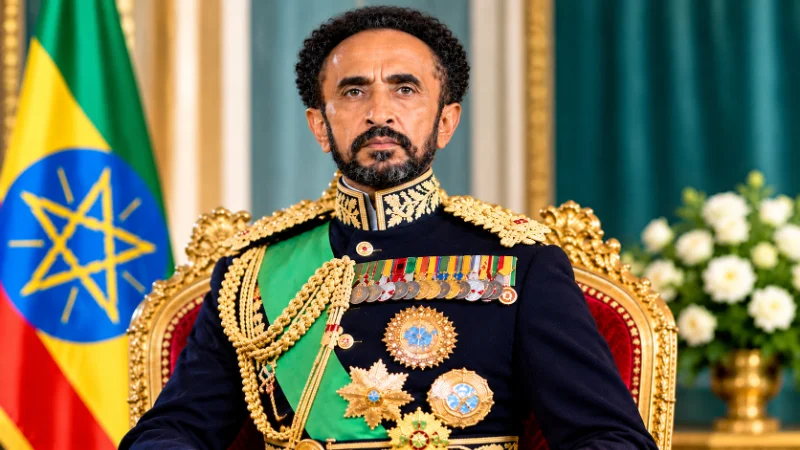
So, who is Jah? Jah is a short form of Yahweh, the Hebrew name for God in the Bible, and it is also the central name for God in the Rastafari faith of Jamaica. The word appears in the King James Bible, inside the word Hallelujah, and in countless reggae songs.
What it means depends on who is speaking. Christians, Jehovah’s Witnesses, and Rastafari all use the name, and each group has a different picture of the one it points to. This guide follows Jah from ancient Hebrew to modern Jamaica, so you can follow a sermon, a song lyric, or a conversation with confidence.
Where the Name Jah Comes From
Jah comes from “Yah,” the shortened form of YHWH, the four-letter Hebrew name for God that appears thousands of times in the Old Testament. Scholars call these four letters the Tetragrammaton. Most English Bibles replace them with “the LORD” in capital letters, which hides the name from casual readers.
The short form shows up in a small number of verses. Psalm 68:4 in the King James Version tells readers to praise God “by his name JAH,” and it is the best known English use. The Hebrew text of Exodus 15:2 and Isaiah 12:2 also contains the short form, though many translations render it as “the LORD.”
English spellings changed over time. “Jehovah” is a later blend of the consonants YHWH with vowels from another Hebrew word, and most scholars now prefer “Yahweh” as the likely ancient pronunciation. Jah sits closest to the original Hebrew short form, “Yah.”
Hallelujah Means Praise Jah
The name is built into a word nearly every English speaker knows. Hallelujah comes from the Hebrew “hallelu-Yah,” which means “praise Yah.” It appears again and again in the Psalms and entered English through Greek and Latin church use.
Anyone who has sung that word in a church or at a concert has already said the name.
How Jewish Tradition Handles the Name
Jewish tradition treats the four-letter name as too sacred to say aloud. Readers say Adonai (“my Lord”) or HaShem (“the Name”) in its place, and this custom is the reason many English Bibles print “the LORD.” The short form Yah is used more freely in song and in verses such as Psalm 150:6, which closes the Psalter with a call for everything that breathes to praise Yah.
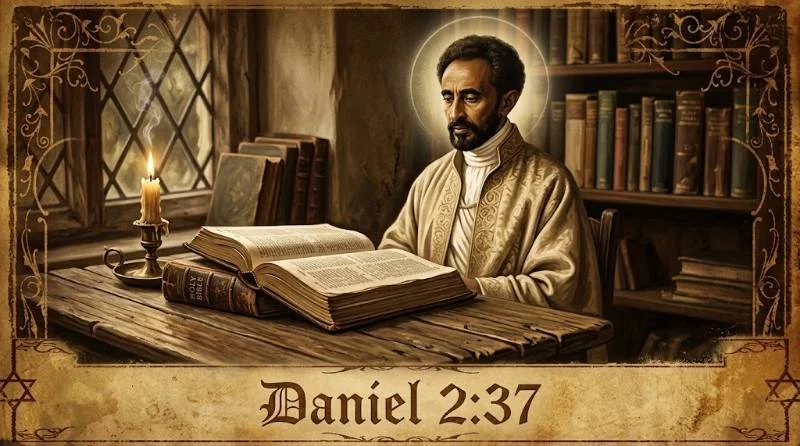
That history explains two things. It shows why the exact pronunciation of the full name is uncertain today, and it shows why a shorter form like Jah became the version people felt free to speak and sing.
How Jehovah’s Witnesses and Other Christians Use Jah
Jehovah’s Witnesses treat Jah as a proper short form of Jehovah, which they regard as God’s personal name. Their reference work Insight on the Scriptures, published on jw.org, defines Jah as an abbreviation of the divine name and points to Psalm 68:4 and the word Hallelujah as support.
In this reading, Jah is the Creator described in the Bible, not a human being who lived on earth. The name appears in their Bible study and prayer, though Jehovah is the form they use most.
Christian ministries such as the Institute for Creation Research also treat Jah as a short form of God’s Hebrew name, and standard Bible dictionaries agree on the word’s origin.
Who Is Jah in Rastafari?
In Rastafari, Jah is God, the Almighty who lives in creation and in every person. Rastafari is a spiritual movement that began in Jamaica in the 1930s among poor Black Jamaicans, who read the Bible as the story of their own enslavement and exile. Many followers also see Jah as having appeared on earth in Haile Selassie I, the emperor of Ethiopia.
The phrase “I and I” makes the belief personal. It covers both “you” and “we,” and it carries the idea that Jah lives in each person, so speaking to someone is also speaking to a divine presence.
The phrase “Jah Rastafari” works as both a greeting and a short prayer, linking the name of God to Ras Tafari, the title Selassie held before his coronation.
Rastafari is not one organization with one creed. Groups such as the Nyabinghi Order, the Bobo Ashanti, and the Twelve Tribes of Israel differ on details, including how literally to take the claim that Selassie was divine.
Haile Selassie I and the Jamaican Roots
Haile Selassie I was born Tafari Makonnen and held the title Ras Tafari before his coronation as emperor of Ethiopia on November 2, 1930. That title gave the movement its name. Early preachers in Jamaica, including Leonard Howell, pointed to the coronation as the fulfillment of biblical prophecy about a king from Africa.
His full title was “King of Kings, Lord of Lords, Conquering Lion of the Tribe of Judah,” language that echoes Revelation 5:5 and 19:16. Followers read those verses as pointing to him. The name Haile Selassie itself means “Power of the Trinity.”
Rastafari also point to Psalm 68, the same chapter that contains the name JAH. Verse 31 says “Ethiopia shall soon stretch out her hands unto God,” a line that many followers read as a prophecy about Ethiopia’s place in God’s plan.
Many accounts credit Marcus Garvey with predicting an African king, though historians dispute the exact words. Ethiopia carried extra meaning because it kept its independence through the colonial era, apart from a brief Italian occupation from 1936 to 1941.
Selassie visited Jamaica on April 21, 1966, and an enormous crowd greeted his plane in Kingston. Rastafari still observe the date as Grounation Day.
Selassie was a lifelong member of the Ethiopian Orthodox Tewahedo Church, and biographers report that he did not accept the claim that he was God. He died in August 1975. Many Rastafari doubt the reports, while others say Jah is spirit and cannot die.
Beliefs and Practices Tied to Jah
For Rastafari, faith in Jah shapes daily life in concrete ways. Many followers read the Bible closely, often the King James Version, and treat it as a guide to their history. They also hold reasoning sessions, where members discuss scripture and current events, and display red, gold, and green, colors linked to Ethiopia.
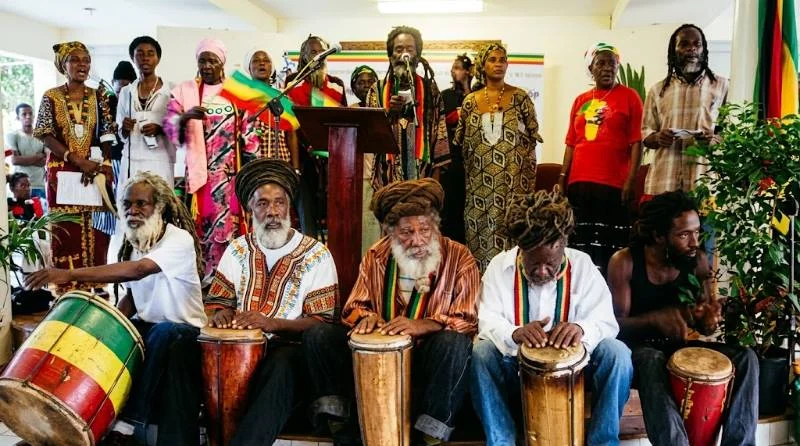
Dreadlocks are tied to Numbers 6:5, which describes a vow in which hair is left uncut. Many followers eat ital food, avoiding processed ingredients and often meat. Some use cannabis as a sacrament during prayer, and Jamaica changed its law in 2015 to decriminalize small amounts and allow sacramental use for Rastafari.
Not every Rastafari follows every practice, and the movement has no central authority that requires them. What ties them together is the belief that Jah is present, and that Africa and its diaspora hold a special place in his plan.
Jah in Jamaican Culture and Everyday Speech
Outside the religion, Jah has worked its way into how many Jamaicans talk. Phrases like “Jah bless,” “Jah know,” and “praise Jah” turn up in greetings, thanks, and goodbyes, including among people who do not follow Rastafari. Culture guides such as My Island Jamaica describe the term as tied to Rastafari while reaching into wider Jamaican life.
Other Rasta words travel alongside it. Babylon stands for oppressive systems, Zion means the African homeland or a place of freedom, and ital describes natural, mostly plant-based food. Nyabinghi gatherings pair drumming, chanting, and prayer directed to Jah.
For believers the name is sacred, so it carries more weight than ordinary slang. Visitors and fans do well to hear it in that light.
Jah in Reggae and Popular Music
Reggae took the name of Jah around the world. Bob Marley, who embraced Rastafari in the 1960s, sang about Jah on albums such as Rastaman Vibration in 1976 and Exodus in 1977. His 1975 song “Jah Live” answered people who said Selassie had died, with the message that Jah is alive.
Marley was baptized in the Ethiopian Orthodox Church in 1980, a year before he died in 1981, and took the name Berhane Selassie. His path shows how the name can sit between Rastafari belief and Orthodox Christian practice.

Other artists made Jah a regular part of their work. Burning Spear, Peter Tosh, and Culture recorded songs of praise and protest rooted in Rasta belief, and the name also lives on in stage names such as Jah Cure and the UK sound system operator Jah Shaka.
In dancehall and hip-hop, “Jah” often appears as a shout-out or refrain. Context usually tells a listener whether the use is devotional or casual.
Where You Are Likely to Hear the Name Jah
Most people meet the name through music. A chorus that praises Jah or a closing shout of “Jah Rastafari” is often the first contact, followed by a lyric search.
Others hear it in everyday life, from a Jamaican neighbor who signs off with “Jah bless,” in a Hallelujah at church, or on a tattoo, flag, or T-shirt that carries Rasta colors. Some know it only as part of a stage name, like British bassist Jah Wobble.
Each context carries a different weight. A church service, a Nyabinghi gathering, and a festival crowd may all use the same word, but they mean three different things by it.